Weighing Scale Data Transfer Software: One Solution for Tally, ERP, Excel, Word, Web & PLC
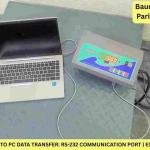
Transfer weighing scale data directly to Tally, ERP, Excel, Word, web applications and PLC systems with a customized solution from U.P. Scales.


Choosing between a digital and analog scale? We compare accuracy, durability, features, and cost to help you decide which technology is right for your business needs in the digital age.
I still get the question, usually from a seasoned plant manager standing next to a dusty, old mechanical beast: "These analog scales just last forever. Why should I switch to digital?"
It's a fair point. Those old dial scales are monuments to simple, mechanical durability. But asking whether to buy a new analog scale today is like asking whether to buy a new film camera for your marketing photos. The core technology has been surpassed for virtually every industrial application.
This isn't about nostalgia; it's about capability. Let's break down the real-world differences to see why digital is the undisputed choice for modern business, and the few, rare niches where analog might still linger.
| Feature | Analog (Mechanical) Scale | Digital (Electronic) Scale |
|---|---|---|
| Working Principle | Uses mechanical levers, springs, and a graduated dial. Weight physically moves a pointer. | Uses electronic load cells and a digital indicator. Weight is converted into an electrical signal and displayed numerically. |
| Accuracy & Resolution | Limited by dial graduation. Prone to parallax error (reading varies with viewing angle). Typically ±0.5% to ±1% of capacity. | High precision with clear numeric display. Eliminates reading errors. Accuracy up to ±0.1% or better, with very fine resolution (e.g., 0.01 g on a 30 kg scale). |
| Features & Functions | Single function: weight indication only. | Multiple functions: Tare, parts counting, check weighing, percentage weighing, accumulation, data logging, PC/printer connectivity. |
| Durability & Environment | Highly resistant to EMI/RFI and power fluctuations. Performs well in dusty, dry environments. | Requires power. Can be affected by severe EMI (near heavy motors), but modern models offer high IP ratings for washdown, dust, and corrosion resistance. |
| Ease of Use | Requires operator judgment to read the dial. Slower and less suitable for high-speed operations. | Instant, clear, and unambiguous readings. One-button operations (tare, zero) improve speed and efficiency. |
| Calibration & Maintenance | Mechanical adjustment of springs/levers required. Needs skilled technicians and is difficult to fine-tune. | Simple digital calibration via keypad using certified weights. Faster, easier, and often supported by built-in diagnostics. |
| Data Integration | No data output. Readings must be manually recorded, increasing chances of error. | Strong advantage. Interfaces like RS-232, USB, Ethernet, or Wi-Fi allow direct data transfer to systems, eliminating manual entry errors. |
| Long-Term Cost | Lower initial cost. Higher operational cost due to manual recording, slower processes, and higher risk of errors. | Higher initial investment. Lower Total Cost of Ownership (TCO) due to labor savings, accuracy, automation, and data integration. |
The table tells the story, but the impact is in daily operations:
In 2024, the justification for a new analog scale is extremely limited. It might be considered only for:
Even in these cases, modern digital solutions (like solar-powered, ruggedized scales with EMI shielding) often provide a better, more capable answer.
The question is no longer "Which is better?" The market has answered. Manufacturers have overwhelmingly shifted R&D to digital technology. Finding a new, high-quality, serviceable industrial analog scale is becoming difficult. Parts and technicians for them are increasingly rare.
You're not choosing between two equal, modern options. You're choosing between the past and the future of your operational efficiency.
If you're replacing an old mechanical scale, here's the good news:
If you're replacing an old mechanical scale, here's the good news:
For any business focused on accuracy, efficiency, data-driven decisions, and controlling long-term costs, the choice is clear. The digital scale is not just an upgrade; it's a fundamental tool for modern industry.
The analog scale had a long and honorable run. But in the same way the calculator replaced the slide rule, the digital scale has redefined what's possible in weighing technology. Investing in digital is investing in the capability of your business.
Ready to modernize your weighing process? Explore our full range of Digital Industrial Scales designed with the features and connectivity your business needs to compete.
Original Source: https://upscales.buyweighingmachine.com/blog/digital-vs-analog-scales-the-definitive-guide-for-modern

Transfer weighing scale data directly to Tally, ERP, Excel, Word, web applications and PLC systems with a customized solution from U.P. Scales.
Need reliable general-purpose laboratory balances? U.P. SCALES, authorized dealer of Aczet, offers CG-L precision balances, CG-N counting scales, CG-S stainless steel scales, and CG Series table top balances. Pan India delivery & installation.
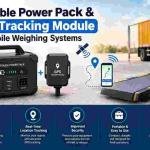
In today's dynamic industrial landscape, weighing operations are no longer confined to fixed locations. Field service teams, mobile inspection units, logistics fleets, and temporary production sites all require weighing systems that can travel with them.